Showing posts with label Ebook Success. Show all posts

Monday, January 7, 2013

The Right "Write" Attitude

Rolling with the punches inspired this article because I'm still sick and supposed to be taking it easy. Sometimes you just can't go about business as usual. You just have to take a step back whether you want to or not.

Today, let's talk about the way you respond to your audience. When your work is put out into the world, you'll sometimes receive unanticipated responses from that audience.

(This article previously appeared in Writing Hacks, my subscription newsletter for writers. Subscribe today if you want to read articles like this as soon as they are published.)

A lot of authors indie publish a book and wait for the bucks to roll in. They're stunned when their book doesn't sell. A month passes, and they want to weep when they see their sales report. They get depressed. They begin to question their writing and their writing career.

A lot of authors indie publish a book and wait for accolades to be tossed their way. When they immediately get a scathing 1-star review, they're devastated. Weeks pass, more bad reviews appear even though they also have a few excellent 5-star reviews. Each bad one is like a knife in the heart. They get depressed. They begin to question their writing and their writing career.

Tempered and Tough

Most of these authors I've described above have not been in the trenches for years on end -- writing, submitting to NY editors and agents, and getting rejected over and over. Or, they've never had a book come out from a publisher and had it trashed by "real" reviewers, meaning those hired by a periodical to write journalistic reviews, not casual readers posting reviews.

The problem with these authors who are having their hearts broken is that they haven't been toughened by years in the trenches. I've been doing this for more than 20 years. Just as steel is made stronger by heat-tempering, so is an author by being roasted alive on a fairly regular basis.

I have some advice for all of you who aren't selling like you wish or those who are getting savaged by heartless reviewers. Consider adopting these characteristics for the new year.

7 Tips For Attitude Adjustment

1. This is a marathon, not a sprint.

If you're in this to make some quick bucks over a short time frame, then you're in the wrong business. From the moment you begin indie publishing, you must know that you're in it for the long haul. It will take time to build an audience and name recognition and begin selling steadily each day.

2. Learn everything you can about marketing and promotion.

Pick and choose among the many avenues and do what you can do without sacrificing the writing.

3. Write and keep improving.

4. Strive to publish at least 2 books a year to keep growing your audience satisfied.

5. Learn to ignore bad reviews because you will ALWAYS get them. There's no avoiding them. Just read some of the scathing reviews the biggest names in romance get -- like two of my favorites, Susan Elizabeth Phillips or Linda Howard -- and you'll realize that there are a ton of people who don't like the 2 most popular names in the genre! So if people don't like your books, then you're in good company.

6. Focus on the good -- making sales however few they may be -- and adopt the attitude that tomorrow will be brighter and keep trying.

If you sold a book this week, then rejoice! Careers are built one book at a time; one sale at a time.

7. Don't look at other authors who are doing well and envy their success. For heaven's sake, don't try to sabotage your fellow authors because they're succeeding, and you're not. What goes around; comes around.

I've been a professional writer -- meaning earning my primary income from writing -- for a couple of decades. I had a lot of lean years even when I was selling regularly to NY. There were more years when my writing income came from freelance clients not from books. I just didn't give up though, and finally all the hard work paid off. A lot of people might look at me and say that I made it big in less than a year, but they don't see that other 20+ years of work and dedication.

Takeaway Truth

No one has it easy. You either pay your dues in the beginning, along the way, or just when you think you're going to get the big break. No one gets off scot-free, but you can make it easier on yourself by adopting the right "write" attitude. That attitude adjustment will help you be less vulnerable to stinker reviews, and it will also keep your motivation ramped up.

Tuesday, December 11, 2012

Ebook Stats Reason To Rejoice

T'is the season to be jolly, but it seems that the majority of ebook authors, especially those who are indie published, aren't very jolly. Why? Because just about everyone is out shopping instead of home reading. Sales are declining -- ask any indie author, and he or she will gladly moan about the downward spiral.

Print Book Sales Rise

This is the season that book buyers hit the stores for glossy print books chock full of photographs. You know, the so-called coffee table books that get stacked on that piece of furniture and are rarely read. The books on the NYT bestseller's list sell well too -- usually by people who don't know a particular person's reading taste but who know that the person reads. Therefore, a NYT hit is the perfect gift. Right? Well, not usually.

Reality Check

Sales are cyclical. There are always peaks and valleys, and a literary Death Valley usually begins the week of Thanksgiving and stretches to just past New Year's. Take heart. Sales will begin to pick up after Christmas when all the proud new Kindle, Kobo, and Nook owners begin filling their devices with ebooks.

Market Share

Another reason to take heart is the continued growth of ebook sales according to a new BookStats joint report from the Association of American Publishers and the Book Industry Study Group. That study, released back in the summer, revealed that digital books were the "dominant single format" in adult fiction.

To give you a point of reference, in 2008, ebooks captured .6% of the trade market, and two years later, in 2010, ebooks took 6.4% of that market (that was 110 million of the 2.57 billion books sold).

GalleyCat quoted from the BookStats report: "In 2011, ebooks took 30% of net publisher sales." That's all publisher sales!

What This Means

Rather than declining, there are more books sold now than ever. Ebook sales will continue to grow, but people will still read print books. More books will be read -- print and digital -- and that's a very good thing.

With every ebook reader sold, the demand for ebooks will increase. The really great thing about this is that readers have access to a lot of different kinds of stories. Where once publishing houses decreed what readers wanted, i.e., historicals set mostly in England in the Regency era, no hero who's a rock star, or no "chick lit" books, in the indie ebook world, you find stories that you really want to read.

don'to romances that who or anywhere but is niche-oriented fiction and more and more people will use ereading devices that are sold, the bigger the demand for ebooks of every type.

Takeaway Truth

Don't be discouraged. Selling successfully is a marathon, not a sprint. To quote another aphorism: a rising tide floats all boats.

Thursday, November 15, 2012

You Are Not Your Writing

An important lesson a professional writer must learn is this powerful truth: You are not your writing.

You Vs. Your Writing

You must learn to separate your self-identity from your writing. You have to learn that because if you don't, you're going to be one miserable writer. People who don't understand this truth are those who get crushed by rejection and bad reviews.

I know some writers who reel from one nasty comment to another. If they read some good review, they're ecstatic. If they read a bad one, they're in the pits of despair.

If your writing gets rejected by an agent, an editor, or a reader, that does not mean that you have been rejected, but a lot of people think it does.

Separation

Learning that you are not your writing is necessary in order to survive this fierce business. If you cave at the first sign of rejection, i.e., not placing in a contest, not getting a positive response from an agent or editor, then you might need to rethink your aspirations.

Rejection – from publishing professionals and from readers – is a huge part of being a professional writer whether you're published by a traditional publishing company or you're indie published.There will be peaks and valleys. Success is a long road. Learn positive ways to deal with the valleys.

Takeaway Truth

The sooner you learn that you are not your writing, the happier and more productive you'll be.

Thursday, October 11, 2012

Publishing Tips For iTunes


Back in June, I decided to no longer publish my ebooks to iTunes via Smashwords. There were many issues that resulted in that decision.

1. Smashwords, while a wonderful asset for an indie author, has become extremely slow to respond. Getting a change to your book file is slow. Premium acceptance is slow. Weird little glitches have started appearing. For instance, one of my books was archived. Why? I have no idea. It took quite some time to even get Smashwords to respond to my plea for help with the situation. In the last few months, I've found it very difficult to get any kind of support. Perhaps it's just me, but I don't think I'm the only one experiencing these problems.

2. When publishing directly to Apple, you get access to a Dashboard with your actual sales numbers instead of trying to compile data from the massive spreadsheet Smashwords generates.

3. You get higher royalties by publishing direct.

(This article previously appeared in Writing Hacks, my subscription newsletter for writers. Subscribe today if you want to read articles like this as soon as they are published.)

Of course, in order to be allowed to publish your work directly to iTunes, you have to be approved as a Publisher. You also have to upload your work with an Apple computer. No PC allowed. That's a deductible business expense so I decided to go for it.

Four months later, I still don't have my ebooks published through iTunes so I'll have a gap in earnings for these past months since I've already pulled my books from Smashwords distribution. The problems I ran into are what I want to warn you about today. That way, you can take steps to minimize the time it will take you to overcome or avoid similar problems.

First Step

Visit iTunes Connect and read or download the information. While the iTunes process isn't particularly user-friendly, it's not impossible to understand either.

Once you're read all that, and you're equipped with a Mac computer, you should be ready to rock and roll and set up a Publisher account. You must wait to be approved by Apple as a Publisher. Once that's done, you can start filling out the forms, and this is where it gets challenging.

Vital Info To Know

If you already have an iTunes account, your information recorded for that account will pre-populate when you start filling in the Publisher account forms.

1. Make sure that the name you set up on your iTunes account is your legal name, i.e., the name is identical to the name on your social security card or TIN. If it doesn't match, expect delays.

2. Make sure that the name on your credit card matches the name on your social security number or TIN. If it doesn't, expect delays.

3. Apple is NOT equipped on any of their forms to deal with a middle initial.

For all these reasons, I am still not set up to publish directly with Apple.

1. I've had an iTunes account for years, but that name doesn't contain my middle initial. So when I started filling out the W9 U.S. Tax Form on the Apple Publisher site, my iTunes account name was pre-populated into iTunes, and there's NO way to edit it.

2. The name on my credit card of record is just my initials and surname. Also not the same as my SS# name. Apple pre-populates the WHO IS AUTHORIZED TO SIGN THIS FORM with the name from your credit card. That's just my initials and last name.

3. Apple cannot change the form online. You can't publish unless you fill out the online form. The information will be knowingly wrong which will put you in the naughty chair with Uncle Sam. There are no provisions for middle initials in any of the forms needed to set up the account.

I contacted Apple. Took a week for a reply from a very nice guy in the Finance office. He acknowledged that the online form could not be changed, but it had to be filled out anyway. Then, he explained that I had to mail their Finance office a completed hard copy of a W9 with the correct information. They would "hand correct" the account, but it will never show up online when I look at it as being correct.

What To Do


If you want to publish directly to iTunes, do this:

1. Check your existing iTunes account now. If your user name is Rock&RollBaby, you might want to start a new iTunes account with your legal name. Set up every aspect of your iTunes account as a professional publisher. I had already been approved as a publisher before I ran head-on into the problems described above. If I'd known about this, I'd have started a new iTunes account.

2. Make sure the credit card you register for your iTunes purchases has the name that matches your tax number.

3. If your legal name has a middle initial, go to IRS.gov and print the W9 form and instructions. Print it out, fill it out so it's ready to go.

4. When your iTunes account is cleaned up and ready, register with iTunes Connect as a publisher. Once approved, view the Tax and Banking forms you must fill out. Contact Author Support and tell them you'll have to mail a hard copy W9 because the pre-populated name doesn't match the name on your Tax ID. (Of course, you may be lucky, and your name does match. Or, if Apple gets enough problems with this issue, they may update their form. However, they've been publishing for several years so that probably isn't likely.)

Wait for the email from them giving the address to use when mailing the form. Mail the form Certified, Return Receipt Requested. You need all the CYA you can get when dealing with tax issues.

Once you receive approval, then you really are ready to go.

Takeaway Truth

Get things cleaned up or set it up right from the get-go, and you'll avoid problems.

Wednesday, October 3, 2012

Judge A Book By Its Cover

Judge A Book By Its Cover 2012, or JABBIC, is now open.

From The Contest Chair

JUDGE A BOOK BY ITS COVER CONTEST 2012, sponsored by Houston Bay Area RWA, is now open for entries.

Your covers will be judged by booksellers around the world, and the winning cover in each category will be featured in a full-page color ad on the inside front cover of the April 2013 Romance Readers Report.

Again this year, we will also feature the Reader's Choice Winners from each category on our web site. JABBIC 2011 covers were viewed by thousands of visitors to the contest site.

IF YOUR BOOK IS SELF-PUBLISHED, YOU WILL BE ABLE TO GIVE CREDIT WHERE CREDIT'S DUE (YOUR COVER ARTIST OR YOURSELF.)

Entry Deadline: Entries must be received by January 15, 2013

Entry Fee: $15

Eligibility: Published in 2012

Enter: The cover of your book or novella published by a traditional house, ePublisher, POD or self-published during 2012

Entry Format: Electronic files (JPG or GIF) only

Categories: Contemporary Series, Single Title/Mainstream, Historical, Romantic Suspense, Sci-Fi/Fantasy/Paranormal, Sexiest Cover, Young Adult and Inspirational

Judges: Booksellers in the United States, Canada, the United Kingdom, New Zealand and Australia

Top Prize: Winners will be featured in a full-page color ad on the inside front cover of the April 2013 Romance Writers Report

More Information

FMI, entry form and rules, visit our contest website at:
https://jabbic.hbarwa.com/
or contact Contest Coordinator Leslie Marshman at: judgeabook at hbarwa. com

Takeaway Truth

Think you have a great cover? Then enter and go for the recognition your cover deserves.


Tuesday, September 25, 2012

Choosing Free Ebooks

Today, I want to talk about free ebooks and what I realized recently about how I choose to add them to my Kindle. As an author, I'm usually more willing to give other authors latitude when it comes to their books. I'll overlook things that the average reader might scourge an author on.

Having said that, yesterday, after perusing the lists of free ebooks, I realized my practice of obtaining books had changed. You see, when I first got my Kindle more than 2 years ago and discovered the land of free ebooks, I went wild with stocking my cyber library.

If it was free, I wanted it -- regardless of genre or anything else. In fact, I didn't even read the blurb. I just grabbed them and was happy to fill my Kindle. 

That Was Then; This Is Now

As time has passed and the volume of free ebooks has swelled like a storm-surge tide, I've grown much more discriminating. Last year, I ruthlessly culled my Kindle library. I opened every book; read the first couple of pages; and deleted if the book didn't grab my attention.

Then I started reading the blurb before downloading free ebooks. As time has passed and my life has grown impossibly busy, I rarely have time to read blurbs now! I've begun just scrolling through the emails I receive from the many blogs that showcase free ebooks -- just looking at the book covers.

If I saw a book cover that interested me, then, and only then, would I take the time to follow the link to the Kindle page.

Free Books No Longer Attract Simply Because They're Free

Just about every author I know who offers a book for free has been bemoaning the fact that they no longer get downloads of the free books numbering in the tens of thousands. What kind of world is it when people turn down free books? The simple answer is that it's the kind of world we've created by offering so many free books I guess. Even giving away a book isn't enough to attract attention in this new world order, and it isn't a guarantee that anyone will take a free book.

Back to yesterday when I quickly scrolled through about 100 ebooks. Of all those ebooks, only 2 interested me enough -- based on their covers -- to go to their respective Amazon pages and grab them. Coincidentally, it turned out one book was by an author I've read before who is indie and print-published. The other book was from an indie-only author, but I've read him and like his thrillers. He gets better with every book.

Cover Art Is Crucial

So this admonition is for those who think any cover will do on a free or inexpensive or ebook (because they're not like REAL books). It won't. If your cover is uninteresting, ugly, or amateurish, no one will want your book even if it is free or inexpensive.

Takeaway Truth

When competition increases -- and it has in the last year -- you must make sure that all the elements that go into your book package are above reproach -- especially the cover.

Tuesday, August 7, 2012

Finding The Perfect Title

Recently, I blogged on 99cents ebooks (What's In A Name?) about the importance of good titles.

I thought some more about this and came up with some tips to help you if you have a tough time finding the perfect title.

Title First Aid

1. Listen to music – with and without lyrics. Lyrics might give you a word or phrase that inspires. Just music alone may emphasize the tone or mood of the book and put you in the mood where your brain is more creative and will spit out words that might become a title.

2. Read: the classics, poetry, the Bible, Shakespeare, dictionaries of proverbs, cliches, or slang phrases – depending on what kind of book you've written. Countless numbers of books have titles from the Bible or Shakespeare's works. Mine what you read for titles and let what you read make your imagination soar.

3. Watch movies and television. Make terse notes -- using just a word or two -- about the impressions you get from what you watch.

4. Brainstorm. Do this by yourself, with family, and with friends. Have a title party. Invite some writing friends and sit around and spew words. Title by committee which, I'm guessing, would be similar to television and movie writing by committee.

How To Brainstorm

1. Make a list of words that you think describe your book – adjectives, adverbs, nouns, verbs. Write down every word you can think of that depicts the plot, the tone, the theme, the action, the hero, the setting, the relationships, etc. Maybe listen to music that you've "matched" to the book while you do this. Then look at the list of words. Draw circles around the ones that resonate. Can you combine a couple into a succinct title?

2. Try the 2 column method. Arrange the words you've thought of in columns. Adjectives in one, nouns in another. Do the same for adverbs and verbs. Then pick 1 word from each column to arrive at an adjective and noun or an adverb and verb phrase.

3. Use all this to go off on any tangent that leads you to another phrase or word.

Unharness Your Imagination

When you brainstorm, don't harness your imagination by sticking to a category. Combine a note you made about a book or movie with a word or two about your particular story. That's how I came up with the title for the book that I'll soon publish -- Scents and Sensuality.

I was reading Sense and Sensibility again, and it suddenly hit me -- a play on words with Scents taking the place of Sense because the heroine of my book is a perfumer. Sensuality because it sounds somewhat similar to Sensibility and the pairing reminds me of the Austen title. Also, body scent is directly related to sex appeal and perceived sensuality. The science of sex appeal is another important element of my new romantic comedy.

Takeaway Truth

A rose by any other name might still smell the same, but a book by any other title might never get bought. I think Margaret Mitchell was smart to cast aside her original title, Tomorrow Is Another Day, in favor of Gone With The Wind.

Wednesday, July 18, 2012

3 Steps To Successful Marketing

A knowledge of marketing will help you in your effort to sell anything from books to widgets. Here are 3 Basic Steps To Successful Marketing.

(This article previously appeared in Writing Hacks, my subscription newsletter for writers. Subscribe today if you want to read articles like this as soon as they are published.)

1. Get noticed.

The world must find you. Have a blog and a website. Guest blog. Join writer's groups. Write book reviews and post on the major booksellers' websites. Find an aspect of Social Media that you can comfortably work. Network your friends and family. Word of mouth from readers who like your books is priceless so work on creating that.

2. Establish credibility.

You do this with your ad copy, i.e. every written text about your book from your Book Description and Biography to your book cover. Reviews can help but you won't get reviews unless you get readers. Everything should shout PROFESSIONAL, INTRIGUING. Your book should be indistinguishable from one published by a big NY publisher. That's your goal with everything you do in producing your book package.

3. Make sales.

Never give a reader a chance to say no. In other words, don't let anything on that book page confuse them or make them pause and think or turn them off.

If you're uncertain about how to go about any of these steps, I always advise writers to find an author whose books are similar to yours and who is achieving the level of sales you want. Then spend a lot of time analyzing what they do: their book pages, bio page, and what they do.

Takeaway Truth

Learn from someone whose career is what you'd like to emulate.

Wednesday, June 13, 2012

Ebook Pricing

When I first started publishing e-books, I had a business plan, and that plan included pricing. This was 14 months ago. My, how the world of e-book publishing has changed in 14 months.

For the first six months, I priced all my e-books at $.99. I had studied all the bestsellers in e-books and had done enormous research about the effect of price and sales. At that time, a $.99 e-book could put you on a map and introduce you to readers who had never heard of you before.

(This article previously appeared in Writing Hacks, my subscription newsletter for writers. Subscribe today if you want to read articles like this as soon as they are published.)

That Was Then

In those six months, the number of authors publishing e-books increased dramatically. By the fall, many authors were complaining about slow sales. I did more research. I found that there seemed to be an increasingly strong correlation between bad reviews and low prices of e-books. I also found that a low-priced e-book no longer attracted as much attention.

Like many other authors, I came to the conclusion that you couldn't maintain good earnings at cut rate prices. Once you're not selling 10,000 copies a month of a title, you realize that you can't make a decent living if the far fewer sales are at $.99. My pricing strategy had worked in the short term to bring me to the attention of readers who didn't know my name, but the time had come to raise prices. The data I analyzed showed that a book peaked in sales at about four months. After that, sales declined and then leveled off at a stable point. After a book has been out a while, month in and month out, it will sell just about the same number of copies every month.

I raised my prices. The interesting thing is that I continue to sell the same number of books per title. The other interesting thing I noted was that I no longer had very many returns on those books. All books fade, and if you're not hitting the top sales lists, you're not going to be the most popular girl at the dance with people lined up to get to dance with you.

Ebook sales at $.99 are just something you can't sustain and build a career on. It was great as an attention getter, but I wanted readers who liked my work enough that they were willing to pay more than $.99 for my books. Now, after another six months, I'm happy with my decision to raise the price of my books. In fact, as a test, I increased the price of Old Enough To Know Better to $3.99 to see what effect it had on sales. To my surprise, sales increased. That told me that I had reached the point where readers would pay more than a cut rate price for my books.

This Is Now

Fast forward to today. Will $.99 e-books get you noticed today? I don't think so – not in a world when on any given day there are thousands of free e-books. In fact, free doesn't get that much notice either. Every day of the week I hear authors bemoaning slow sales, declining sales, and no sales. What's worse is that when a book is offered free, authors must contend with scathing reviews that seemingly tie the quality of the book to the free or low price.

My Take

There are a few conclusions I draw from this whole pricing conundrum.

1. Free or $.99 doesn't command much attention these days. In fact, as a reader, I'm a perfect example of this. I had about 100 free books on my Kindle. I went in this week, selected each one, read the first couple of pages, and deleted the book if it didn't grab me. Would I have done this if I had paid for the books? Probably not. I'd at least have read the first couple of chapters. But there are so many other free and cheap books I can download to replace the hundred I deleted. Go ahead and experiment with a low price or a no price, but don't keep that price forever. Watch for signs that it's time to increase the price of the book.

2. If you offer books free or low priced, be prepared for the bad reviews that inevitably will come your way. Too many people think free or cheap is indicative of low quality, and they will base their reviews on that belief as if cheap is a self-fulfilling prophecy of a bad book.

3. Readers who shop according to price point are not readers who will even read your work when your book is free or cheap. They probably won't buy your other books if they are priced up. Too many of the readers who download free or cheap e-books simply will never read them. I don't know why unless they're really not into reading that much or into that genre. They're just into getting bargains – something for free. They're into ebooks maybe because it's just the latest cool tech thing. Who knows?

4. Bite the bullet and decide that you want to cultivate readers who are your followers and who are willing to pay for your work, and pay more than $.99. If they like your writing, those are the readers who will be loyal to you. They will follow you from book to book.

5. Consider pricing according to length. Shorter works are less expensive. Longer works are more expensive. Simple and straightforward. I want readers who like my writing and who respect all the hard work I put into a book. If I lower a price for a special promotion, I want them to feel as if they are getting a great bargain. However, I always put a date in the book description as to when the book will return to its regular price.

Takeaway Truth

Last year, free and low-priced worked to attract attention. This year, it doesn't seem to. Pay close attention to the trends and tailor your business plan to fit what's going on in the marketplace.

Thursday, May 31, 2012

Jane (I'm Still Single) Jones -- 1 Year Anniversary

On May 27, a year ago, I published the romantic comedy JANE I'm-Still-Single JONES. Join me in a cyber toast to the 1 year anniversary of this book's digital publication.

Jane, as I fondly call this book, was an immediate hit. It made the Top 100 Paid list faster than its predecessor Just One Look. To date, it has sold about 60,000 copies or more. (I really need to find the time to collate all the sales numbers from the various ebook sites.)

In December, I sold World French Rights for Print and Ebook to Bragelonne. The print book is being publishing this month, and I can hardly wait to see the book in French.

Jane (I'm Still Single) Jones: The Storyline

What could be worse for a former high school beauty queen who never landed the only man she ever loved than attending--alone--a 10-year high school reunion in a small town teetering on the edge of a time warp?At least that's how successful textile designer Jane Louise Jones views her situation and her hometown, just south of nowhere in the rolling hills of Louisiana, where a woman is still looked at as a failure if she isn't married. At least, that's what her grandmother and all the other blue-haired women of the Vernon Ladies Bridge Club would have her believe.

Jane is used to dealing with challenges, but she's decidedly nervous about her reunion. What if Morgan Sherwood, the town boy-wonder who made good in a big way, shows up? Morgan was once her secret love, a geeky teen who stole her heart and then broke it before leaving town forever.

Fortunately, her best friend assures her that Morgan will be a no-show. It's terrible when you can't trust your BFF! Morgan arrives with his entourage in a stretch limo. He's not a geeky kid any more. He's six feet of tanned, rippling muscles, and he plans to focus his high-powered brain and use every masculine charm he possesses to seduce the lovely Miss Jones.

With a former classmate intending to claim him as husband number four, a Hollywood starlet who shows up to party with him, and an old boyfriend intent on stealing Jane's affection, Morgan has more obstacles than he'd expected.Throw in the Ladies of the Bridge Club, lots of southern charm, and a ten-year old betrayal, and you have all the ingredients for a heartwarming, funny, sexy romantic comedy. Can Jane and Morgan get it right this time?

Jane wants to resist. She really does. Her brain says no, but her body says, oh, baby! Yes, yes, yes. Smoldering desire, thwarted for ten years, explodes into passion. Will it burn away their doubts or turn their love into ashes?

Takeaway Truth

Jane (I'm Still Single) Jones is a fun romp of a story. I love this book, and I love being an Indie Author!

Thursday, April 26, 2012

Teaching Readers & Writers About Tags

Most writers know how important tags, or keywords, are. However, tags are important elements for readers too because it gives them an opportunity to express their opinions about a book.

(A version of this article previously appeared on Writing Hacks, my subscription newsletter for writers. Subscribe today if you'd like articles like this as soon as they are published.)

Tag or Keyword Defined

Tags, often called keywords, or the words or phrases used to describe something in a way that someone entering those specific words in a Search Engine can find the information for which they search.

Keywords are important in SEO (Search Engine Optimization), and that means you want the best and most popular keywords (meaning used most often) to send searchers to your information or product. With books, you want to use the perfect keywords in writing your Product Description and in tagging your book. Using the perfect keywords is optimizing the search engine results. That's your goal.

Amazon

I'll be talking about Amazon today, but all the ebook sellers use keywords or tags.

Amazon allows an author to specify 7 keywords when you upload a book file through KDP.

After the book is live on the webpage, the author may add another 8 keywords. Always do this so you have 15 keywords that you have specifically selected to describe your book so that Search Engines (and that's what Amazon is) can find your book.

Readers can also add tags if they don't see one on there that they think describes the book. That's why you see some books with far more than 15 tags--readers added the others.

The more times someone has clicked to AGREE with your tags, the higher in the rankings your book will appear. This means, for example, that if my book has had my tags agreed with by web visitors 50 times, but another very similar book has only had 1 person agree with their tags, my book will come up in a search result sooner than the other writer's book.

Anyone who visits your book page can click to AGREE with the tags or to DISAGREE. If you want to agree or disagree with a writer's tags, make sure you expand the Tag list so that all tags show so you'll know what you are expressing an opinion about.Don't forget, you can also add other tags.

Authors love it when readers who like their books, agree with tags, add new favorable tags, agree with good reviews, etc.

Only 1 Per Customer

Since all ebook sellers place tracking cookies, you can only undertake these actions above only once. That's right, 1 time per authorized user. That keeps people from voting themselves up or a competitor down. (Yes, it happens. There are jealous authors out there.)

How You Make Your Opinion Known

Readers, if you like a book or an author, show them in these ways:

1. Click LIKE right below the book title.

2. Click AGREE on any good review if you agree.

3. Click DISAGREE on any negative review if you think it is without merit.

4. Write your own favorable review. It doesn't have to be long.

I think everyone has a right to their own opinion about a book. I would never vote against a review that was thoughtful and stated why they didn't care for the book. Everything is subjective. However, if I had a review that said things like a lot I've seen, i.e., "I hate romance but I read it anyway and it was a piece of garbage." or "This was only 99cents and it wasn't worth that." or "This author is stupid and doesn't know what she's talking about." or "This book was about adultery, and that's a sin so I give this book 1 star."

Those are subjective comments, not reviews. A review tells what's good about a book as well as what was lacking. Too many of the reviews you find on Amazon and other ebook seller sites sound like the snark you find at office parties. So think carefully and analyze before you take action.

5. Scroll down and find the TAGS. AGREE, ADD, or DISAGREE.

Make sure there are no typos in the tag you assign or the book may end up with a meaningless tag like OMANTIC rather than ROMANTIC.

6. Don't use your ability to express your opinion about a book as a forum for airing any personal grievances or grudges or for expressing political, religious, or sexual opinions.


Takeaway Truth

The ability to express an opinion online also carries with it the responsibility to be fair. Authors work hard at their craft so please be objective and honest. What you say may impact their ability to earn a living.

Friday, April 6, 2012

5 Product Description Tips

I want to give some quick tips about your book description or Product Description as it's called on Amazon.

(This article previously appeared on Writing Hacks, my subscription newsletter for writers. Subscribe today if you'd like articles like this as soon as they are published.)

Within the past couple of weeks, I've had requests from 4 authors to critique their book blurbs, and I volunteered to do it for 2 other authors who were concerned about their slow sales.

In all cases, I had not read any of the books so I didn't know what they were about. That's probably a good situation because that way I was objective about whether the product description made me want to read the book.

Here's some advice I gave those authors. You can quickly utilize these tips and see if they work for you.

Points To Remember

1. Carefully arrange or format your Product Description.

When someone reads a book blurb, if they haven't previously read your books, they really don't care what anyone else said about the book. Not at that point. They are only interested in determining whether the book is something they want. They don't care how many accolades you may have. They are only wondering whether they should buy the book.

So, unless you are a NYT or USA Today bestselling author, put all those review quotes and similar information below the part that tells what your book is about. Especially put it below if you are midlist or below in the pecking order or if you are an unknown quantity to most readers.

If you are Jane Doe from Podunk, Texas, and you've never had a book published before anywhere or in any medium, you are unknown. It probably won't matter if you have a quote from Publishers Weekly to put at the top of the blurb. Other writers might buy you out of curiosity, but the vast reading audience of strangers will not.

2. You must grab the browsing book buyer's attention within seconds.

Learn how to write short ad copy using buzz words. I edited the book blurb on Old Enough To Know Better once I got it out of the Prime Select program. I started the copy with "A funny, sexy cougar-licious romance to warm your heart."

I may change that, but for now, that's the marketing hook with which I'm experimenting. I try to use a first sentence that's a log line or a marketing hook or some combination of buzz words because they're a pop culture shortcut that clues the reader in as to what kind of book it is. They get that without reading further. Studies show that most readers make up their minds within a few sentences.

3. Short is better.

Because most readers make up their minds quickly, the faster you can get the necessary information in, the better. Usually this means that shorter is better. My book descriptions look long, but all the necessary info is at the top. If the browsing book buyer is interested, he can read on down and see the accolades, the list of Bonus Features, and contact information for me. I also put in the date of the most recent file upload if I've made any changes or corrections to the file.

4. Tone is important.

I think if you're pushing a romantic comedy, then your book blurb should have at least a mild element of humor. If you're writing mystery, then your blurb should probably not be a laugh fest unless it's a comic mystery. If at all possible, make your tone match your book.

5. Be careful with excerpts.

I've actually decided not to buy books based on the excerpt posted in the book description. Make your excerpt match the category of your book. A romantic comedy should have a matching excerpt. You don't necessarily have to post chapter 1 as an excerpt. Pull out a scene that depicts the kind of book you're selling and use that. That's how the big publishers do it. Remember that scene usually on the flyleaf of many books? That's the kind of excerpt you want.

Don't use an excerpt unless it absolutely knocks your socks off and makes a reader want the book. Until readers care about the characters (and that's by reading from the beginning) they're not going to be interested in a scene that's basically just a prelude to a seduction rather than part of the seduction itself or a prelude to a murder, etc.

Takeaway Truth

Writing ad copy is an art. That's why publishing houses hire Cover Copy Editors. Or they used to. Many still do I suppose. Work on your cover copy. Read hundreds of other book blurbs and sharpen your skills.


Note: If Joan Reeves aka SlingWords helps you get ahead, please consider buying one of my books (Written Wisdom is perfect for writers--readers too!), subscribing (only $.99 per month) to the Kindle Edition of SlingWords,or making a donation of any amount by clicking the button below. Thank you for your moral support and any monetary support you see fit to contribute.

Tuesday, April 3, 2012

Promised Stats On First Ebook

I'm overwhelmed with tax season. I hate leaving it to the last weeks before the deadline, but I had no choice this year.

Last week when I was celebrating the one year anniversary of publishing my first ebook, I promised to post stats for those who are curious. So here's a quick look at sales stats on my first ebook Just One Look.

Details

I haven't added sales at the other outlets, only Kindle, but I'm very pleased with what I found in looking back over the year.

The book went live March 27 and was available for sale on that day on Kindle only.

The lowest number of copies sold in any month was that first month of March with 54 sales logged in those 4 days.

The highest number of copies sold in any month was 13,835 in June.

All total, in 2011, I sold 41,554 copies through Kindle. This book was part of my 3 book contract with French publisher Bragelonne for World French Rights for Print and Ebook. The print edition of the French translation will be out this year.

To my relief, this book continues to sell well as do my other books. By the way, I'd love to sell movie rights to this book. Any producers out there? *G* Email me and I'll put you in touch with my rights agent. She'd be thrilled.

Now if I can get my tax finished, I can get my latest book published to bring my total books to 9--8 romantic comedies and 1 nonfiction. (Oh, and I have a book that's just begging to be written! Sometimes I'd like to clone me.)

Takeaway Truth

Sometimes a little step into the unknown can bring great rewards. Be encouraged to take that step.

Monday, March 26, 2012

Happy Birthday, Just One Look

I'm preoccupied with final proofs of my next romantic comedy Kiss On My List. I hope to have it uploaded by the end of this month.

However, I wanted to take a moment to comment on concluding my first year as an indie author. One year ago yesterday, I uploaded first ebook file to Amazon's Kindle publishing program. Two days later, it was live and started selling.

I had planned to add up all the sales of this book so I could post that stat as a way to show how empowering being an indie author can be. Trying to catch up on everything that fell through the cracks during the weeks leading up to the wedding didn't allow for that yet.

When I get this next book uploaded and get my income tax filed, I will post about those sales for Just One Look. I think they're in the neighborhood of 100,000 for that book, but that's just a guess. So check back next week when I'll report back on the book that started my indie revolution.

For the first time ever, an author has a convenient and affordable way to get her work in front of readers.

Takeaway Truth

Nothing ventured; nothing gained. Sometimes by venturing a little into the unknown, one may gain rewards that are stunning.

Friday, March 9, 2012

3 Marketing Habits To Adopt

Every author is constantly trying to figure out how to sell more books. What worked last month, may not be effective this month. Part of the problem is that everyone is looking for an instant fix. A magic answer. The rest of the problem is that there is no magic solution and no one way that works for everyone.

(This article previously appeared on Writing Hacks, my subscription newsletter for writers. Subscribe today if you'd like articles like this as soon as they are published.)

Here are 3 habits that you can use to help you though.

1. Think Long Term.

You need to develop a marketing strategy that focuses on long term goals. Becoming a "name" or selling a 10K books this month isn't going to happen overnight. Be patient and write some achievable goals designed to help you increase your name recognition and awareness of your brand. Start with one thing, i.e., blogging every day, and build your brand. Or decide Twitter will be your go-to network to build your brand. Learn all you can about it. You can't possibly hit every social network and be effective. So decide what is doable for you.

Make a plan. That old axiom still applies: Plan your work; work your plan. Be consistent. Be patient. Be in it for the long haul.

2. Know your brand.

Yeah, you there. What is your brand? What kind of writing are you known for or want to be known for? You need to give a lot of thought to this because it's virtually impossible to market yourself and/or your work unless you know what your product is. If you honestly don't know how to market your work, then find an author who writes a similar book. See how they market themselves. Emulate. Don't copy. Con't try to be that author. The world doesn't need another Nora Roberts or Amanda Hocking or Joe Konrath. Besides, you'll never be anything but a pale imitation so it's always best to be you.

Be yourself, but learn how to present yourself and your work. Once you've discovered or determined your identity as a writer, decide how you're going to get that point across. Then at every opportunity, display your brand online and in the real world.

3. Increase your visibility.

You must be noticed. No one will want to find your books if you sit quietly in a corner. Investigate low cost ways that make a big impact. Write articles, book reviews, blog, guest blog, comment, speak up, Tweet, Facebook, attend writers club meetings, network. There are thousands of ways to get noticed online and in the real world.

Figure out what you can do that's just a step out of your comfort zone. You see, you have to step out of your comfort zone to grow. If you're not satisfied with your sales numbers or your career growth, you must do something different because if you keep doing the same old thing, you'll keep getting the same old results.

Takeaway Truth

This is the year to do something different. Take action. Discover your writer identity. Draw up a plan. Get moving now.

Tuesday, March 6, 2012

How Do You Capture Readers

Since we're in a countdown for my daughter's wedding Saturday, I'm having to prioritize my time in favor of family obligations.

That means that writing, blogging, and all that goes with being an author must take a back seat for a while. I'm distressed that I'm leaving all of you word slingers and readers without my daily two cents.

So I thought I'd post some of the articles I've written on other blogs and on my various other websites. Today, I'm giving you a blog post I wrote in February for 99cent Ebooks.

If you are primarily a reader, rather than a writer, you may find some of these insights explain much about the books you see for sale.

How Do You Capture Readers?

Whether you are a reader or a writer, chances are, you know the answer to this question. A book captures a reader with an intoxicating first sentence, first paragraph, first page–followed by equally addicting pages two through two hundred or more.

Oh, compelling cover art, back "blurb," author quotes, and a few other things help too. Unfortunately, most of these other things cannot be controlled by authors if they are published by traditional print or ebook publishers. If they are indie authors who self-publish, then they have a complete control over the entire package.

What Writers Control

However, what all writers can control regardless of the publishing process is the writing–the words they choose and the way they put them together to create the story. That's what all writers should focus on.

Each time I start a manuscript, I think I've got the perfect opening sentence for the story and the character. Often, I compare my opening sentences to some of my favorites to see whether I feel that frisson of awareness that shivers up my spine when I read some of my all-time favorites.

I want to share some of these sentences that always intrigue me no matter how many times I've read them. They sing a siren song that made me read the book the first time, and they still tease me with their sense of music and rhythm. I think these opening sentences evoke an emotional response in the reader, and that's what readers can't resist.

Favorite Opening Sentences

"Last night I dreamt I went to Mandeley again." (Rebecca by Daphne du Maurier)

"It was a queer, sultry summer, the summer they electrocuted the Rosenbergs, and I didn’t know what I was doing in New York." (The Bell Jar by Sylvia Plath)

"I never knew her in life." (The Black Dahlia by James Ellroy)

"Nobody was really surprised when it happened, not really, not at the subconscious level where savage things grow." (Carrie by Stephen King)

"Death was driving an emerald green Lexus." (Winter Moon by Dean Koontz)

"It was the best of times; it was the worst of times." (A Tale of Two Cities by Charles Dickens)

Opening Acts

The worst thing about reading someone else's sparkling prose is that I despair of ever being as good. The best thing is that I'm motivated to improve my writing skills. So I keep writing and working on my prose, from the first few sentences to the last one preceding, "The End."

Here are a few of the opening lines from some of my books. I write romantic comedy so I want to hit a humorous note from the very first sentence.

Just One Look.

I'm pretty sure every woman reading this excerpt from my first ebook romance can identify with my heroine.

"Jennifer Monroe shivered and rubbed the goose-bumped flesh of her arms. A meat locker would feel warmer than a doctor's examining room! Why do they have to keep it so cold? And why do they act as if you have nothing better to do than sit around clad only in a piece of paper and your birthday suit, and wait?"

Still The One

I'm fairly certain every woman has fantasized about what she'd do if given the chance to show someone from her past how she has grown from an ugly duckling to a swan.

"Ally Fletcher had waited six years for this opportunity. Six long years. There was no way a mere thunderstorm was going to stop her. Of course, in Texas, calling this a mere thunderstorm was like saying a Texas tornado was a mere puff of wind."

The Trouble With Love (Book 1, Texas One Night Stands)

"Every woman makes mistakes. Susannah Quinn glared at the door to the Sheriff's private office. Yep, every woman makes mistakes, but most women didn't have to put up with a constant reminder of their not so brilliant actions. And most women didn't have their mistake showing up at their office –flaunting tanned muscles and polluting the environment with clouds of testosterone and male arrogance. Of course, mistake didn't quite describe what she'd done. No tiny lapse in judgment for old Susannah Quinn. When she decided to throw common sense out the window, she didn't mess around."

Nobody's Cinderella (Book 1, San Antone Two-Step)

"Darcy Benton wondered if she needed to check into a hospital. Her nervous system seemed to have shorted out, producing feet that felt like blocks of ice and hands that perspired as if it were July rather than December. Her heart raced faster than a quarter horse, and her face felt as warm as a passive solar collector at the end of a hot Texas day."

Old Enough To Know Better (Book 1, The Good, The Bad, and The Girly)

"If you can't trust your friends, then who can you trust? Stormy clarkson planned to pose that question to her soon-to-be ex-friend Libby the minute she saw the conniving woman. In the meantime, all she could do was ignore Sean Butler, the physical manifestation of Libby's scheming."

What are the opening acts in some of your favorite books?

Takeaway Truth

I'm one of the luckiest people on the planet. I make my living by writing stories about love, romance, sex, commitment, and all the funny, crazy things that happen to a man and a woman who are made for each other–but who don't yet know it.

Monday, February 13, 2012

Find Your Book's Rank on iTunes

Do you know how to find your book's rank on iTunes? It's not especially user-friendly or an easy process. I really hate when you have to click so many things to get the information you want, but that describes this process.

(This article previously appeared on Writing Hacks, my subscription newsletter for writers. Subscribe today if you'd like articles like this as soon as they are published.)

Here are step by step instructions for obtaining the rank of iTunes book bestsellers.

1. If you don't have iTunes software on your computer, download it now. It's free.

2. Get it up and running.

3. From the menu bar on top click Books.

4. On the right sidebar of the iTunes page you'll see Books. The first section is Books Quick Links. Click All Categories. I'll be using the Romance Category for illustration purposes. The process is the same for any category. From the drop-down menu that opens, click Romance.

5. When the Romance Category opens, scroll down to the third listing in the right sidebar, Top Charts. The words next to that say See All--Paid. Click See All-Paid, and the Top 200 Paid books in Romance displays. This Top 200 is the bestselling romances whether historical or contemporary. Most of these books are publisher books. However, some of the books are from indies.

6. If your book doesn't appear in the top 200 of All Romance, then you want to look into various niche categories based upon the category you selected for the book. Use the navigation arrow buttons in upper left of the iTunes page (They're on that black bar and kind of small and easy to miss) to go back to the previous page. Once there, scroll down, looking on right sidebar for More Romance. Click Cntemporary, then, scroll up to Top Charts / See All--Paid and click that. The Top 200 of Contemporary Romances on the Paid list opens.

7. Repeat this general process to view the Bestsellers in all categories. To find the link for your book once you locate it, just right click and Copy Link.

Takeaway Truth

Once you use this a few times, it won't seem so complicated.

Saturday, February 11, 2012

Resources for Writers

Ah, the weekend is here. Time to relax, and also time to learn some tricks and tools of the writing trade. Here are a few freebies to help you.

My friend Joel Friedlander has a free 24-page book. Just click, fill in the form with your email addy, and 10 Things You Need to Know About Self-Publishing will be delivered asap.

Kindle has a number of free books on writing and publishing. I haven't read these, but they look promising and have recent copyrights so, if the author knows the business, they should be worthwhile. Plus, they're free so you're not out any money if they don't pan out.

Go Publish Yourself! by Katie Salidas.

Smashwords Style Guide by Smashwords CEO Mark Coker is the most recent edition of the bible for Smashwords formatting. This is the Kindle link, but of course you can also get it from the Smashwords website

Write Good or Die, edited by Scott Nicholson, includes tips from best-selling authors.

Pimp Yourself by erotica author Tymber Dalton was just published. It's free so you might check it out if the whole self-promotion thing leaves you shaking with anxiety.

100 Websites for Fiction Authors by Ty Johnston is for beginning fiction writers looking for places to publish their writing gratis and paid.

Kindle Links to Top 100

Here are links to the Kindle store bestseller lists, Paid and Free, for books on writing and publishing. Peruse the list. You may find several books that will help you.

Top 100: Publishing and Books

Top 100: Words & Language Reference

Top 100: Editing Writing Reference

Top 100: Writing Skill Reference

Takeaway Truth

Never stop learning. That's one of the keys of success in any career.

Friday, February 10, 2012

Book Marketing Trinity

I know a lot of you are waiting for my next nonfiction for writers: Ebook Success: Joan Sells & Tells All.

I'm working on it and a novel that I hope to publish this month. I'm afraid Ebook Success: Joan Sells & Tells All won't be available until after my daughter's wedding next month. I'm just bogged down with wedding details and events.

Also, I've written so much about this subject that I'm trying to figure out what to delete since I don't think a 500 page volume is called for. Therefore, I must beg your indulgence and patience.

Today, I offer an excerpt from the book.

Book Marketing Holy Trinity

There are 3 main elements that determine your book's initial sales success. None of these 3, which I call the Book Marketing Holy Trinity, is actually the content. You see, the content of the book determines whether it continues selling over a long period of time, and the content also determines the sales success of your next book.

Here are what I think are the 3 crucial elements for successful initial sales, and all 3 must "equal each other." Let me explain.

1. Cover Art

2. Title

3. Product Description

Cover Art

You know that your cover art should be appealing and eye-catching. Cover art should also show exactly what kind of book the buyer gets in terms of genre, mood or tone--some call it style.

Is your book a sexy, humorous contemporary romance? Does the cover show that? Mystery thriller? Horror? Western? Books aimed at a female audience often get confused. A sexy cover on a women's fiction book is misleading just as roses and a pastoral scene on a steamy romance falls way short of the goal.

The cover should clearly depict the genre. But wait, there's more. The cover also should show the tone or mood of the book. It should show whether it's a humorous romance or a serious romance.

Remember back in the late 1990's when chick lit and romantic comedy ruled publishing? Just about all those books had "cartoon" covers to clearly indicate to the reader that the book was fun, humorous and romantic.

A cover should show whether a horror book is a humorous zombie like the movie Shaun of the Dead or a more cerebral horror like The Walking Dead. Same with mystery--funny or a gritty, hard-edged detective mystery. A good book cover should somehow indicate the mood, tone, or style of the book.

Additionally, the book cover should be specific and relate in some visual way to your story--not to any horror or mystery or romance. What in the book is depicted on the cover? A scene? The characters? Some emotional aspect?

The cover is more than a picture. The font used for the book title should visually tie to the story and the genre too. Click this link and look at the title font Cynthia Wicklund used for Thief of Souls. See how the letters looked cracked or fractured as if riddled with fault lines. That perfectly depicts the male protagonist whose exquisite features belie the evil.

(Note: The font used for the author name can be used for branding purposes, but that's a different article.)

If you need some more examples of this crucial element, look at some of the bestsellers in the same genre in which you write. Do they illustrate what I mean? Chances are the books selling the best over the longest period of time will do just that.

Title

Every author begins a book with a working title. Often, with print publishing, that title changes according to editorial discretion. With indie self-publishing, you can keep your title, but be aware that the title should equal the cover art and the Product Description.

If you've got a funny cover, the title should reflect that. If you've got a somber cover, the same holds true. In fact, a good title should reflect the book and the cover art or in some way distil the essence of the story into those few words. I'm going to use my books as examples here because I know them best.

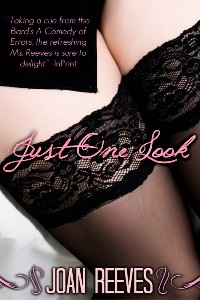
My first ebook was Just One Look. This is a great title for this book because there are layers to the meaning of the title. A lot of people think it's just that old song "Just One Look" so that's okay if it makes them take a look at this romantic comedy. That's also okay because it's a rocking, fun oldie.

However, the title actually refers to these facts: the gynecologist in the opening scene--who happens to be the heroine's high school heart throb--says to the heroine who recognizes him with just one look at his face and only to get the heck out of there: "Let's just take one look."

At another point in the story, he takes just one look at her, and because of the particular circumstances, belatedly recognizes her.

My reason for selecting The Trouble With Love (Texas One Night Stands) for the first book in my Texas One Night Stands series is because "love is fraught with trouble" is the theme running through the book. If you want to find out what the heroine thinks is the real trouble with love, I guess you'll have to read the book. I do confess to loving the Kelly Clarkson song by the same name. I must have listened to it a thousand times when I was writing the book.

One of my most recent books is Old Enough To Know Better. Sure, we all know that phrase. Maybe you've been told that. There are several scenes where the heroine reminds herself that she is old enough to know better than to get involved emotionally. That phrase is also integral to one of the final scenes in the book where I twist that phrase. If you've read the book, you know which scene I mean.

Down & Dirty Title Analysis

Here are a few other titles of mine and a quick analysis.

JANE I'm-Still-Single JONES says it all: embarrassing name tag for a woman at her 10 year high school reunion.

Nobody's Cinderella (Book 1 of San Antone Two-Step) is a romantic comedy about a woman who has self-image problems and who is in love with her handsome boss.

Romeo and Judy Anne (Book 2 of Texas One Night Stands) is one of my favorite titles. Romeo tells you handsome playboy. Judy Anne tells you small town Texas girl. Put them together and you have a fun incongruity that promises an adventure.

Still The One is about a man and a woman who married young and divorced shortly thereafter, but each is still the only one for the other. Another golden oldie that's a rocking, fun song which is a plus.

Product Description

The Product Description should continue where the title and blurb left off. What you say in this blurb should deliver what you've promised with the title and the cover art. You don't want to stop the buyer dead in her tracks with something in the blurb that conflicts with what you promised in the title and the cover art.

Anything that confuses the buyer or conflicts will make the buyer PAUSE, and that's never good. In that pause, they are thinking: "What does this mean? That's not what the cover promises. This says the book is one thing, but the title promises another." The pause gives the reader time to change his mind rather than happily click BUY.

You want the reader to say a resounding yes after reading the title, viewing the cover art, and reading the blurb. You want them motivated to buy, not to think of reasons why they shouldn't buy.

With all the books available in the ebook marketplace, you have about 10 seconds to hook the reader with the title and cover art in order to get the customer to read your blurb. All 3 elements should make the reader say: "Yep. Sounds like my kind of book."

Give Me One Reason To Stay Here

That Tracy Chapman song is one of my favorites. I listened to it when I wrote Old Enough To Know Better.

Tracy sings: "Give me a reason to stay here, or I'll turn my back around."

Adopt that as your theme song when you write your Product Description. Never give the reader a reason to leave your book page without buying.

At the beginning of the blurb, give me reasons to buy your book. That means, entice me with marketing hooks that I cannot refuse.

Do you know what marketing hooks are? They are buzz words or phrases that do these 3 things:

1. create excitement about your book

2. tell the reader what kind of book it is

3. make the reader want to read the book.

In case you think great reviews are marketing hooks, let me be clear. They can be, but only if the reviews mean anything to the book browser. A lot of people who read ebooks have already learned that reviews posted on the book page may not mean much.

If you post reviews in the body of your Product Description, they may or may not be read. It's a crap shoot.

Here are some marketing hooks: runaway bride, secret baby, ugly duckling, amnesia story, debt of honor, Cinderella, evil twin, love at first sight, bad cop, ripped from the headlines, woman in jeopardy, marriage of convenience, and on and on.

Carefully read the Product Descriptions on bestselling books. Learn from them.

This post is already too long, or I'd give you my take on a sound format for Product Descriptions. Maybe next time. For now, read and digest this. Then act upon it.

Takeaway Truth

Always remember: never give a reader a reason to say NO to your book.

Note: If Joan Reeves aka SlingWords helps you get ahead, please consider buying one of my books (Written Wisdom is perfect for writers--readers too!), subscribing (only $.99 per month) to the Kindle Edition of SlingWords,or making a donation of any amount by clicking the button below. Thank you for your moral support and any monetary support you see fit to contribute.